
Ember: a pivot to safer construction sites
Three weeks before the Oxford Moonshot Demo Day, Ember's founders dropped their first venture idea and started again. Backed by mentors and a growing network, the pivot has already won them pilots on major UK construction sites.
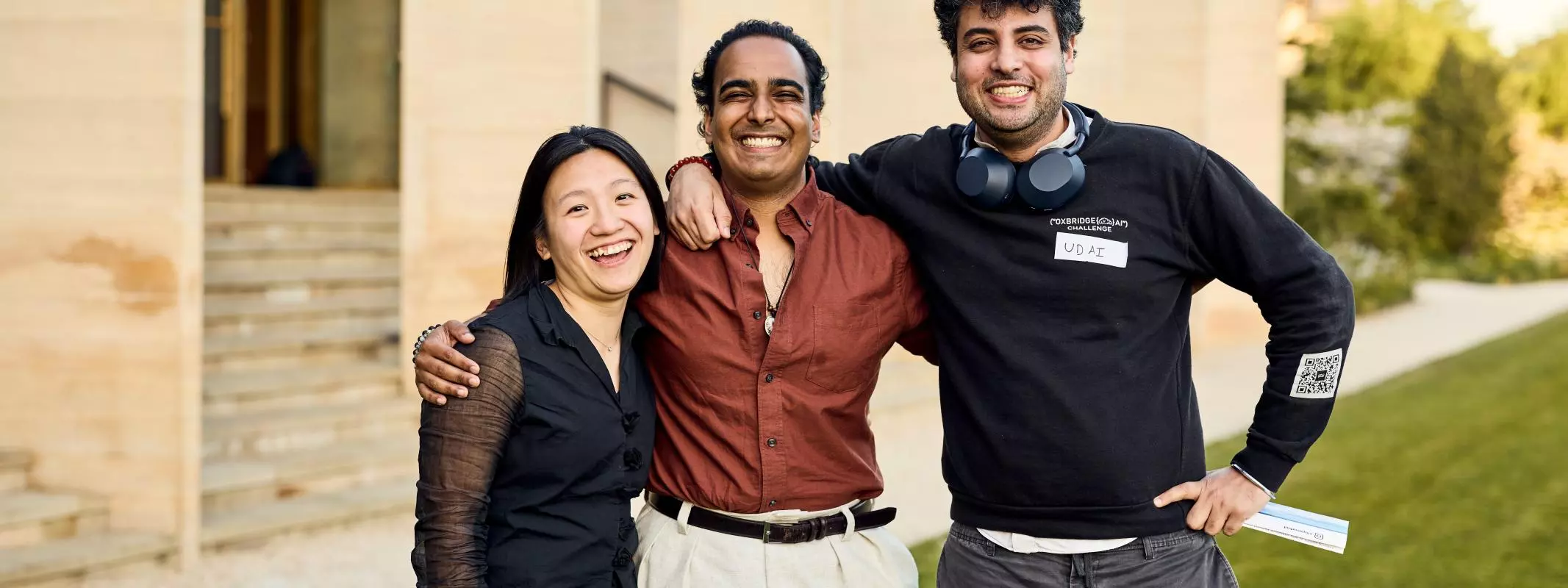
As an aerospace DPhil candidate, Danny Rajalingam didn't arrive at the University of Oxford expecting to become an entrepreneur. 'If me from two years ago could see me now, he'd think: "Who is this guy – taking risks, moving so quickly?"' he laughs.
Yet informed risk is something Danny and his business partner Inez Kesuma have clearly learned to embrace. The founders behind Ember, a startup offering an AI safety companion for construction, dropped the first business idea they developed at Oxford when they recognised it had reached its limits. Instead, they made a last-minute change of direction to develop Ember – and now have industry players and international investors keen to know more.
Entering the world of startups unexpectedly
Both are DPhil students in the Department of Engineering Science – Danny in aerospace engineering and Inez in battery safety with the University's Zero Institute. They met through StEP Ignite in 2025, a student-led Oxford programme that helps participants build entrepreneurial skills and develop business ideas, whatever their experience. 'I stumbled into being a founder,' says Danny, who believes it's never too early to join an Oxford innovation programme. 'I did StEP Ignite in my second term, after a friend had done it. It gives you an insight into the world of entrepreneurship. You don't even have to have a business idea. They'll help you develop one. You just see if you can build something interesting. At first, I'd hear talks from entrepreneurs and almost think they were lunatics – taking no caution, burning through money. But I learned it's truly possible to combine academic rigour and business flexibility. It's about knowing when you need one, and when you need the other.'
During the programme, he and Inez joined a team of five, all without any previous startup experience but wanting to create something science-based, ethical and sustainable. They developed the idea for Voltaic, a clean-power storage system for smaller companies that can't afford their own systems and so face expensive peak tariffs, when the grid relies more on fossil fuels. Voltaic would lease batteries to these companies to store energy when costs are lower, usually during periods of renewable generation. When prices rise and the grid supplies more fossil-fuel-based power, the AI-driven system would automatically discharge the cheaper, greener stored energy – reducing companies' bills and emissions.
'At the end of StEP Ignite, the Voltaic presentation had a really positive response,' says Danny. 'StEP allowed us to pretend to be founders, in a very safe environment, but we weren't sure whether the idea could go further. Only Inez and I wanted to try, so we entered Oxford Climate Ventures at the Saïd Business School, which aims to support climate-focused startups.'
Again, their presentation was praised, but they also received feedback questioning aspects of Voltaic's viability. They shared some of those doubts, but Danny and Inez still gained a place in the first cohort of the Oxford Moonshot in 2025 – EnSpire's four-month pre-seed programme for founders at the launch-to-accelerate stage.
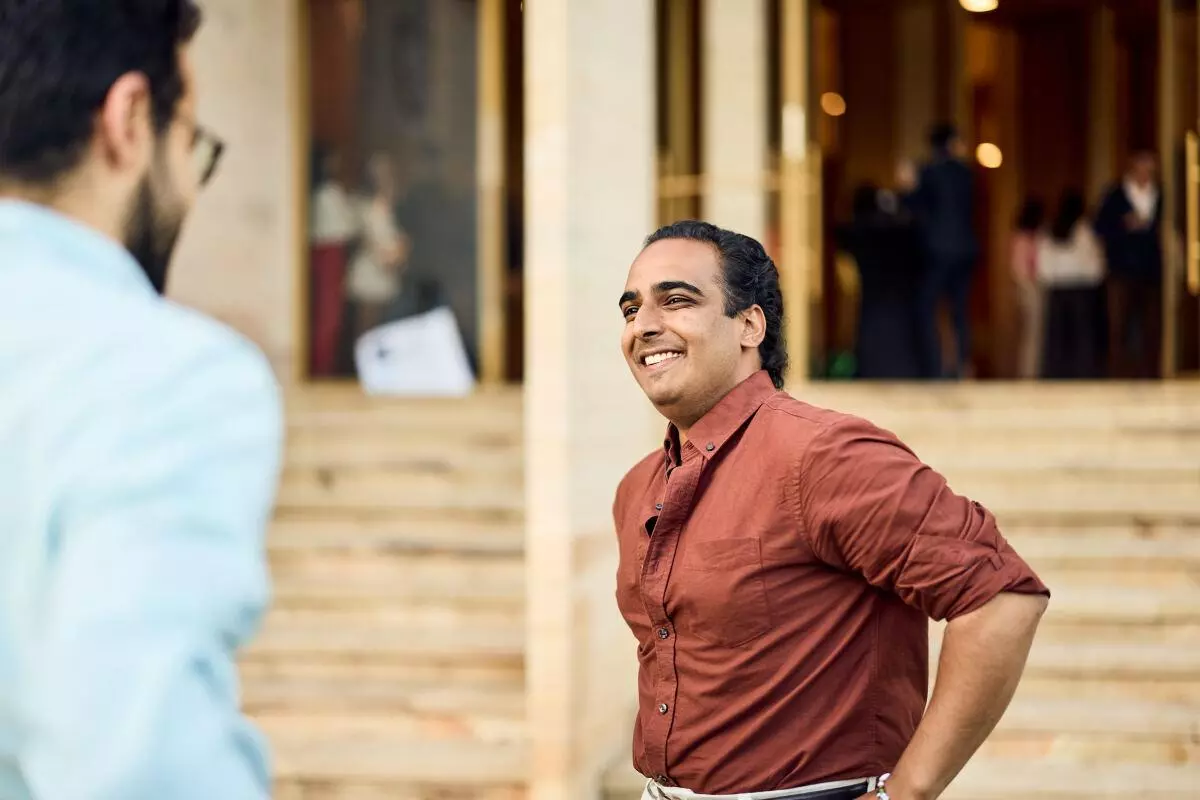
Danny Rajalingam, Founder of Ember'The Oxford Moonshot focused less on your idea, and more on you as an individual founder,' says Danny. 'It gave us incredible access to successful academic entrepreneurs. We really had the chance to talk to them and ask questions like how their first conversation with investors went. We could see first-hand the intersection between founding and academia, and that they're not siloed.'
Knowing when to abandon their first idea
'The Oxford Moonshot focused less on your idea, and more on you as an individual founder,' says Danny. 'It gave us incredible access to successful academic entrepreneurs. We really had the chance to talk to them and ask questions like how their first conversation with investors went. We could see first-hand the intersection between founding and academia, and that they're not siloed.'
Three quarters of the way through the Oxford Moonshot, Danny and Inez took their bold step. 'We realised we'd made mistakes with Voltaic, focusing too much on building the product, rather than talking to people and understanding potential customers' needs and real pain points,' says Danny. 'We felt we'd taken the concept as far as we could, and knew we needed to pivot, so three weeks before the Oxford Moonshot's Demo Day, we started to develop Ember. We'd both worked in safety-critical environments and knew about the importance of up-to-date risk assessments, as well as the administrative load Health and Safety Executive documentation places on businesses. So we decided to bring aerospace safety levels to construction, which is the UK's most dangerous industry, using AI models trained on real HSE data and risk assessments from construction sites.'
Although UK safety regulations are among the world's most stringent, construction accounts for around 40 per cent of workplace fatalities. Ember's own research interviews suggest that around 60 per cent of these are linked to out-of-date risk assessments. The high volume of legally required health and safety documentation means there's often a gap between changes on site and the latest paperwork. To tackle this, Ember uses AI to track site conditions in real time, flag hazards instantly and offer safety guidance – saving lives and sparing companies hours of costly paperwork.
Their Oxford Moonshot mentor, Udai Dhamija, President of Oxbridge AI X, was hugely supportive of their idea to pivot. When they suggested researching the market by talking to 50 potential customers, he told them to quadruple that: 'Make yourselves really accountable for your idea.' So they spoke to over 250 safety officers, construction workers and senior managers. The findings confirmed their instinct that companies spend far more time on safety documentation than on monitoring site safety.
'For example, our dialogue with HS2 rail executives showed that the project requires over three hours per day for HSE paperwork, costing £10,000 per site, per day,' says Danny. 'These conversations showed us what Ember could potentially achieve, and enabled us to pitch our idea based on that. We learned we could be comfortable with uncertainty and building flexibility into our plans – unlike the precision we're both used to in our academic research.'
Growing a network for maximum impact
With this adaptive mindset, the gamble worked. Danny and Inez won the Oxford Moonshot pitch, giving them enough funding to develop and verify a new version of Ember for pilots on major construction projects. When site conditions change, Ember will immediately update risk assessments and health and safety documents, and brief workers on safety issues in their chosen language via a phone app. This closes the gap between risk assessments and real-time conditions without the need for any extra technology, increasing safety while reducing companies' regulatory burden and insurance premiums.
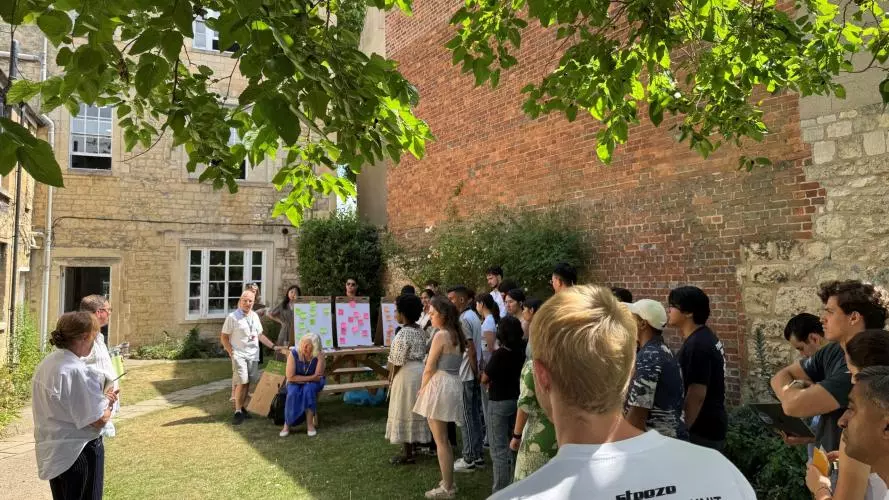
The Oxford Moonshot Demo Day 2026


The pilots began in summer 2026 on major UK construction sites, including HS2 and several leading UK construction firms. Danny and Inez have also developed revenue models for the UK, the EU and the US, and already have offers from angel investors to build and sell in America, but are committed to finishing the pilots before moving to San Francisco later in 2026.
'We need to fully validate Ember before talking to investors,' says Danny. 'Our Oxford innovation journey has given us business understanding at every stage. It's also given us access to amazing networks. We know we can go to the Business School and ask for connections, and we have the skills to talk to those different audiences.'
Next steps include meeting major project managers, attending leading construction conferences and developing partnerships with unions, regulators and insurance firms. 'Our aim is clear: for Ember to become the default global AI safety tool for construction,' says Danny. 'The University's innovation system has been really helpful, asking what we need – for example, if I want to pause my PhD. That support is really empowering.'
About EnSpire Oxford: EnSpire Oxford is the University of Oxford's entrepreneurship hub. We help students, researchers and staff from every division turn ideas into ventures, whether you're curious about entrepreneurship, testing an idea, or ready to launch and grow. Our programmes, competitions and funding run across three stages: Inspire, Launch and Accelerate. Working with partners across Oxford's innovation ecosystem, we connect founders with the skills, mentors, investors and space they need to build. You don't need a business background, or even an idea, to start.
Explore our programmes
From a first hunch to a funded startup, our programmes support Oxford students, alumni, researchers and staff at every stage.

Stay on top of upcoming events, news and stories.
Find out about the University of Oxford's entrepreneurial offering and much more.