Female Entrepreneurship: Evidence, Action and Impact
There's no shortage of brilliant ideas coming out of UK universities, labs and workshops, but women founder-teams often struggle to access the funding and networks they need to scale. Using data gathered through our IDEA initiative, we were delighted to contribute to The Women & Equalities Committee's recent report on female entrepreneurship. The government report lays out a clear set of problems and practical steps, from a proposed Female Enterprise Investment Scheme to better transparency in venture capital and ring-fenced funding, that could help more women turn great research and ideas into scalable businesses.
At EnSpire we've seen the talent and ambition first hand. We also know the barriers the report highlights, from unequal access to finance and limited networks, to fewer role models in some disciplines and practical pressures like caring responsibilities. The Committee's recommendations line up with a lot of the work we're already doing, and point to where we must collectively do more.
What are EnSpire doing to help?
EnSpire exists to help people take the leap from research or an idea into a thriving organisation. Here's how we're supporting women founders right now:
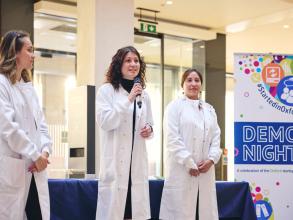
- Running programming, events and resources in partnership with Oxford University Innovation (OUI), Oxford Said Entrepreneurship Centre, Oxford Edge and student societies - all designed to make the route to entrepreneurship clearer and more accessible.
- Providing ringfenced funding for female founders, through initiatives such as the EnSpire founder grants and student society grants.
- Championing global entrepreneurship opportunities, such as the collaboration with MIT on the Royalty Pharma Faculty Founder Prize Competition (2025-2027), with six Oxford women researchers selected for this prestigious Oxford-MIT programme accelerating biotech innovation from lab to market.
- Delivering targeted training: in 2023/24, 48% of attendees across six EnSpire programmes were female, with the Medical Sciences Division seeing 60.7% female participation.
- Offering practical IP and commercialisation help: recent Understanding Intellectual Property workshops run jointly by EnSpire and OUI saw 58% female attendance in 2023/24 and 54% in 2024-25 - a sign that women are keen to engage if the right support is there.
- Running and supporting initiatives that boost belonging and peer networks, including the IDEA (Increasing Diversity in Enterprising Activities) initiative (established in 2021), which has delivered events, an EDI toolkit and the Entrepreneurship for All conference in 2024.
- Promoting targeted opportunities for early career researchers: we actively signpost and promote programmes such as RisingWISE and SeedWISE from Enterprising Women Oxford and encourage better access to fellowships, pre-accelerators and entrepreneurial fellowships aimed at postgraduate and postdoctoral researchers.
What the data tells us (and why it matters)
Oxford's own analysis shows real progress - but also plenty of room to grow. Female participation in commercialisation rose from 27.8% in 2015-16 to 33.7% in 2022-23, and 39% of Oxford spinouts now have at least one female founder. Those numbers are encouraging, yet there are clear gaps: Early Career Researchers, for example, remain underrepresented - under-30s made up just 10.7% of participants in 2022/23. That tells us where to target effort, earlier engagement, more relatable role models, and practical support around IP and commercialisation.
System change takes time, but targeted, well-resourced programmes make a difference. The Committee's report is a timely roadmap: it sets out steps that governments, investors and universities can take to unlock an enormous economic opportunity. EnSpire is proud to be part of the practical work on the ground: running workshops, mentoring founders, and making sure women know the routes to commercialisation exist and how to navigate them.