
MIT-Royalty Pharma Faculty Founder Prize Competition
Accelerating Human Health Innovations: MIT-Royalty Pharma Faculty Founder Prize Competition
In a bold move to bridge the worlds of academia and entrepreneurship, the University of Oxford and MIT have joined forces through the MIT-Royalty Pharma Faculty Founder Prize Competition. This two-year initiative (October 2025 – May 2027) empowers faculty at both institutions to translate human health technologies - including diagnostics, therapeutics, devices, and AI‑driven digital health - into real-world impact.
A ground-breaking study by Sangeeta Bhatia, Susan Hockfield, and Nancy Hopkins revealed stark gender disparities and missed opportunities in biotechnology commercialisation among faculty at MIT. From their findings emerged the startling insight that “there could have been forty additional biotech firms today,” representing countless potential medicines and a significant loss of societal impact.
In response, this joint prize competition aims to dismantle those barriers by making entrepreneurship pathways for women founder more accessible - while inviting all eligible faculty at Oxford and MIT to participate.

Participants in the MIT-Royalty Pharma Faculty Founder Prize Competition will have access to:
- A supportive cohort, expert mentorship, commercialisation workshops, investor introductions, and tailored resources
- Two fully funded trips to MIT (Cambridge, MA)
- $10,000 annual flexible stipend (e.g., postdoc time, childcare, travel)
- MIT Sloan MBA student consulting support
- Eligibility for major awards:
- $250,000 Grand Prize
- $125,000 Oxford Runner-Up Prize
- $75,000 Breakthrough Science Prize (for early-stage projects)
Eligibility
- Open to faculty at Oxford and MIT
- Working on human health technologies, including but not limited to:
- Diagnostics
- Therapeutic devices
- Digital health
- AI-driven tools
Deadline to apply: 11.59pm on 30 September 2025 (UK time).
How to Apply
Interested in transforming your research into impact?
Click the button below to apply through the official application portal.
Have questions or need further information? Contact Greg Jones at greg.jones@admin.ox.ac.uk
Applications are now closed.
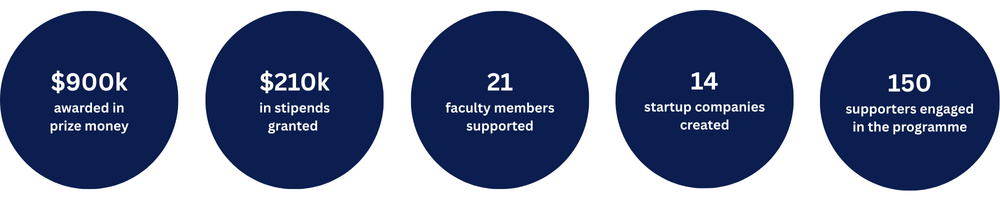
The earlier MIT ‑ only launch demonstrated remarkable outcomes:
Follow us


