Oxford Collaborate on MIT-Royalty Pharma Faculty Founder Prize Competition
In a bold move to bridge the worlds of academia and entrepreneurship, the University of Oxford and MIT have joined forces through the MIT-Royalty Pharma Faculty Founder Prize Competition. This two-year initiative (October 2025 - May 2027) empowers faculty at both institutions to translate human health technologies - including diagnostics, therapeutics, devices, and AI‑driven digital health into real-world impact.
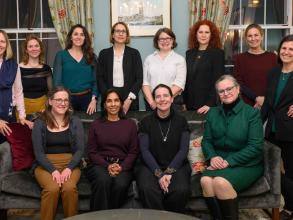
The 12 finalists for its third prize competition have now been announced: six each from MIT and the University of Oxford. The initiative, recently renamed in recognition of a gift by Royalty Pharma, runs a two-year programme that supports biotech innovators and faculty entrepreneurs interested in commercialising their solutions.
Over the course of two years, finalists for the prize competition receive wide-ranging support to help advance and grow their biotech solutions into startups and companies ready for commercialization. This includes various workshops, executive education classes, and mentorship from world-leading entrepreneurs and investors. The program culminates in MIT-Royalty Pharma Prize Competition Showcase, scheduled for 2027.
Sangeeta Bhatia, the John J. and Dorothy Wilson Professor of Health Sciences and Technology and of Electrical Engineering and Computer Science (EECS), and faculty director of the MIT Faculty Founder Initiative says:
"Since the initiative's launch in 2021, we have supported 21 faculty entrepreneurs, advanced life-saving innovations towards patients, sparked the creation of 16 startups that have collectively raised over $70 million in seed funding, created a community of cofounders, and spread our mission to collaborating universities. We are grateful for Royalty Pharma in supporting our mission and being a part of our ambitious goal to fill the gap of 40 faculty-founded life science ventures by 2029."
We're delighted to announce the 2025-2027 Oxford finalists:
- Rachael Bashford-Rogers is an associate professor of molecular and cellular biochemistry at Oxford. Her primary focus areas include utilizing a proprietary multi-AI platform to identify novel and druggable targets implicated in menopause-related diseases (such as osteoporosis, cardiovascular disease, osteoarthritis, rheumatoid arthritis), validating these targets, and advancing them towards clinical development, including both novel therapies and strategic drug repurposing.
- Sally Collins is a professor of obstetrics in the Nuffield Department of Women's and Reproductive Health at Oxford. She is working on Oxailis, which is commercializing an AI-based, decision-support platform that enables non-invasive, quantitative assessment of tissue perfusion with ultrasound. This is the first fully validated, automated solution for vascular function analysis of any organ using existing ultrasound hardware, offering a scalable, low-cost alternative to traditional expensive, contrast-based imaging methods.
- Monika Gullerova is a professor of molecular medicine in the Sir William Dunn School of Pathology at Oxford. She is working on RAIDEN, an AI-driven drug discovery project developing small-molecule medicines that target RNA, unlocking entirely new ways to treat diseases long considered "undruggable." By combining advanced machine learning with molecular biology and chemistry, RAIDEN is redefining how next-generation RNA-targeted therapies are developed.
- Rebeccah Slater is the professor of pediatric neuroimaging in the Department of Pediatrics at Oxford. She has created a tool that interprets brain and heart signals to objectively quantify children's pain and intends to incorporate this technology into existing hospital vital signs monitors, through collaboration with major medical technology suppliers.
- Charlotte Stagg is a professor of human neurophysiology at Oxford. She is working on T-STAR, a novel closed-loop transcranial alternating current stimulation (tACS) system designed to transform motor recovery following stroke. The device boosts on-going brain activity within motor areas of the brain at specific phases in movement. This approach is designed to drive targeted reorganization of circuits within the brain that conventional brain stimulation approaches cannot achieve.
- Louise Thwaites is the professor of experimental critical care in the Centre for Tropical Medicine and Global Health at Oxford. She is developing new AI enabled clinical decision support tools linked to wearable monitoring devices focusing on patients with serious infectious diseases in resource limited healthcare settings.
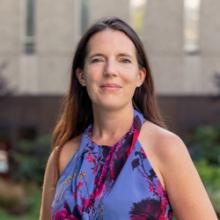
Academic Champion for Women and Diversity in Entrepreneurship, John Black Professor of Bionanoscience at the University of Oxford and Deputy Director of the Kavli Institute for Nanoscience Discovery, Professor Dame Molly Stevens said:
"It has been wonderful working on this new opportunity to bring Oxford and MIT's entrepreneurial talent even closer and I'm delighted with the quality of cohort of founders that we have secured and will be supporting over the program."
Maria C. Yang, interim dean of engineering and William E. Leonhard (1940) Professor in the Department of Mechanical Engineering adds:
"We're deeply grateful for Royalty Pharma's support, which ensures that biotech entrepreneurs at MIT and Oxford have the resources and mentorship to help bring breakthrough ideas to market and, ultimately, to improve lives. The MIT-Royalty Pharma Faculty Founder Initiative has already shown how effectively this model can empower talented biotech innovators, and I look forward to seeing the transformative solutions this latest cohort will develop."
"Royalty Pharma's support of the 2023-2024 MIT-Royalty Pharma Prize Competition with its cohort of 12 researchers from MIT and Brown University laid the foundation for continued support of the initiative through 2029," says Pablo Legorreta, founder and CEO of Royalty Pharma. "As the Initiative expands internationally with the new Oxford University partnership, we look forward to enabling two additional cohorts of innovators to pursue bold ideas which can lead to transformative medicines."
Sangeeta Bhatia adds:
"Oxford's vibrant entrepreneurial ecosystem, combined with the MIT-Royalty Pharma Faculty Founder Prize Competition's proven model for expanding the number of faculty-founded biotech ventures creates a powerful collaboration. I'm particularly grateful to Professor Dame Molly Stevens DBE, who serves as the academic lead for the initiative at Oxford and contributes extensive experience as a world-renowned expert in biosensing technologies and a seasoned entrepreneur,"